
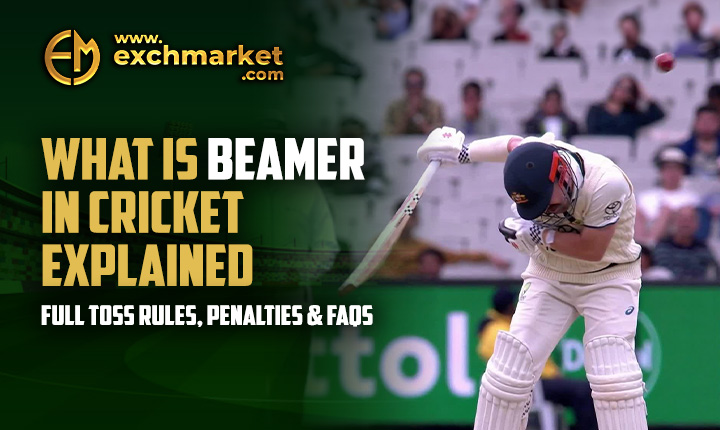
What Is Beamer in Cricket Explained: Full Toss Rules, Penalties & FAQs
Published on December 3, 2025
Many new fans still ask what is beamer in cricket because the delivery looks scary and surprising. A beamer happens when the ball comes at the batter without bouncing and also above the waist height. Moreover, the batter gets almost no reaction time, which makes it very risky. Earlier, some bowlers did it purposely to frighten the batter. However, modern cricket does not allow such dangerous tactics anymore. Umpires take strict actions right away.
Why Beamers Are Dangerous for Batters
Bouncers at least bounce and you get a little idea of the height. But beamers fly straight at your chest or face. Therefore, the ball can hit sensitive parts of the body. Even helmets sometimes can’t fully stop the pain. Additionally, when the bowler is fast like Mark Wood or Umran Malik, the danger increases sharply. Players like batsmen and keepers must always stay alert. Meanwhile, the ICC keeps updating rules to prevent any serious injury after past incidents in cricket history.
What Exactly the Laws Say in 2025
To understand what is beamer in cricket, you must also know the rules written in MCC Law 41.7. The law clearly says that any waist-high full toss in a normal standing position of the batter is illegal. Also, the umpire signals a no-ball right away. One warning comes first. However, if the bowler does it again in the same innings, that bowler must be removed from bowling for the remaining overs. Many leagues like IPL, PSL, ILT20, BBL, The Hundred have adopted the same strict rules as of 2025.
Common Causes and Impact on the Match
Interestingly, most beamers in today’s cricket are not intentional. Bowlers sometimes lose grip because of sweat, dew, or mental pressure. Moreover, when someone tries for a yorker but fails, it might turn into a beamer. The match suddenly becomes tense when it happens. Meanwhile, the batter gets angry or nervous. Crowds shout louder. Therefore, the momentum of the game changes quickly. Also, the bowler starts worrying about control and confidence.
What is Beamer in Cricket – Quick Summary Table
Types of Beamers You Might See
There are mostly two kinds of beamers seen today. First, the accidental ones caused during yorker or slower-ball attempts. Second, the rare and almost banned intentional beamers. Moreover, spin bowlers sometimes deliver slow loopy beamers by mistake when the ball slips. Fast bowlers’ beamers feel scarier because of speed. However, with stronger safety rules, very few bowlers dare to bowl such deliveries on purpose now.
Difference From Other Full Toss Deliveries
Many youngsters confuse what is beamer in cricket with just any full toss. A legal full toss below waist height is fine. Most batters love those balls because they are easy to hit for boundaries. Additionally, umpires use the batter’s normal standing height to judge the delivery. Meanwhile, if the batter jumps and the ball hits above waist height, it is not considered a beamer. Therefore, the stance is very important in the final decision.
Beamers in IPL and T20 Cricket Pressure
With so much excitement in leagues like IPL, beamers still happen sometimes. Also, dew at night matches causes grip issues leading to accidental beamers. In big matches like World Cups or league playoffs, bowlers are under huge pressure. Therefore, mishandling slower balls or yorkers can result in surprise beamers. However, broadcasters replay these moments in slow motion to show how dangerous the ball was traveling toward the batter’s head or ribs.
Penalties and Match Referee Decisions
The penalty system is stronger now than decades ago. First, the umpire signals no-ball and issues a formal warning. Additionally, the next beamer by the same bowler ends their bowling from that innings. Match referees also review intention. Therefore, if someone had a clear motive to hurt the batter, they face heavy fines or suspension in tournaments. Meanwhile, the bowling team must adjust new bowlers quickly which sometimes destroys their strategy.
How Technology Keeps the Game Safe
Umpires use technology more today. Ball-tracking helps in height judgment. Also, stump cameras and spider cams show exact positions. Therefore, mistakes are rare now. Furthermore, the ICC has concussion substitute rules, so if someone gets hit by a dangerous delivery like a beamer, another player can replace them. Smart helmets are being tested as well, which will send alerts to team doctors after big impacts.
Read More: When Dhoni Started Playing Cricket – From Ranchi to World Glory
The Future of Fast Bowling and Safety in 2025 & Beyond
Cricket wants aggression but not injuries. Meanwhile, batters are also playing more attacking shots and standing outside the crease. Therefore, the laws will continue improving. Coaches teach bowlers to control grip, especially youngsters who over-try yorkers. Also, analysts track delivery trends to reduce errors. The future seems safe but still competitive. And fans will always remember the question what is beamer in cricket whenever a full toss flies dangerously in stadiums.
Frequently Asked Questions (FAQs)
Q1. Is a beamer illegal in cricket?
Yes, because it is risky and always given as a no-ball with warnings.
Q2. How many beamers are allowed in cricket?
One warning only; second offense means bowler can’t bowl again in that innings.
Q3. What is the difference between a full toss and a beamer?
Full toss below waist is legal; above waist becomes a beamer.
Q4. What is the difference between a no-ball and a beamer?
All beamers are no-balls, but not every no-ball is a beamer.