
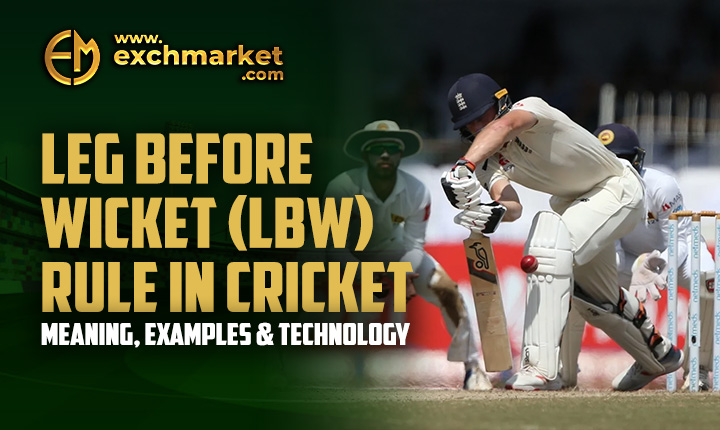
Leg Before Wicket (LBW) Rule in Cricket – Meaning, Examples & Technology
Published on December 8, 2025
The Leg Before Wicket (LBW) Rule in Cricket has always created noise in stadiums. Also, it keeps matches fair by stopping batters from blocking the ball using legs or pads. However, many fans still get confused about this law. LBW makes the contest between bat and ball more real. Moreover, by 2025, cricket technologies became super advanced. So, mistakes are reduced but excitement stays alive. A simple pad miss can turn into a loud appeal. And suddenly, batter's day is over.
How LBW Started and Changed Over Time
During the old days, batters just used legs to save wickets. It looked unfair. Therefore, lawmakers changed things. The Leg Before Wicket (LBW) Rule in Cricket came into existence way back in the 1770s. Later, over-arm bowling changed everything again. Also, bowlers in modern cricket use swing, pace, and spin to target pads smartly. Meanwhile, ICC kept updating LBW laws through 2025 to ensure fairness across Test, ODI, and T20.
Meaning: What Actually Makes LBW Out?
Many young cricketers think LBW only hits legs. But no. The Leg Before Wicket (LBW) Rule in Cricket says that if the ball hits ANY body part first and would hit the stumps, then the batter is in trouble. However, the delivery must be legal. The main idea is simple: play the ball with the bat. Not with legs. Additionally, umpires look at pitch, impact, and trajectory. A miss in any part can save a wicket.
Main Conditions Umpires Check for LBW
Umpires make very quick judgments. The Leg Before Wicket (LBW) Rule in Cricket needs four major points to be correct:
- First, the ball must pitch in-line or outside off stump. Pitching outside leg stump = Not Out.
- Secondly, impact must be in-line with stumps if batters try a shot.
- Moreover, if a batter does NOT play a shot, impact rules become stricter.
- And, the ball must be hitting the stumps.
Therefore, every inch and angle matters a lot. One small step forward can save a player’s career for that moment.
LBW and Batter Strategies Under Pressure
Batters feel pressure when pads are attacked. The Leg Before Wicket (LBW) Rule in Cricket forces them to use footwork wisely. Also, padding away is risky because technology catches even micro mistakes now. Furthermore, modern spinners love trapping batters on front foot. Meanwhile, aggressive batters in T20 support cross-batted shots which again increases chances of LBW. Therefore, smart defense becomes key.
Table: Snapshot of LBW Rules in 2025
Tech Improvements That Made LBW More Accurate
Technology changed cricket forever. Moreover, the Leg Before Wicket (LBW) Rule in Cricket now depends on video review for justice. Hawk-Eye predicts ball path. UltraEdge detects tiny bat touches. Also, HotSpot shows heat marks when the ball meets the bat. Therefore, bat-pad confusion reduces. Although the umpire's call sometimes looks weird, it keeps the on-field umpire’s respect in the game.
LBW Difference in Spin and Pace Bowling
Spinners attack front-foot defense more. They drift and turn the ball cleverly. Meanwhile, fast bowlers use yorkers and inswingers to crush toes. Also, the Leg Before Wicket (LBW) Rule in Cricket applies the same for both. But angles change a lot. Pace LBW usually hits back leg stuck on crease. Spin LBW mostly hits front pads while batter reaching forward. Therefore, reading the ball early becomes a survival skill.
Iconic LBW Moments in World Cricket
We have seen great matches flipped by LBW calls. Moreover, DRS turned silence into sudden shock. Also, the Leg Before Wicket (LBW) Rule in Cricket created many heartbreaking exits. Think of Ashes controversies. IPL playoff reviews. 2011 World Cup knockout tight calls. Fans shout “OUT!” and then nervously stare at the big screen. Meanwhile, a small umpire’s call can save or destroy the inning.
Debates That Continue Even in 2025
Some fans and former players argue that Umpire’s Call must go. Because it feels confusing sometimes. However, ICC says removing it will reduce umpire authority. Also, real cricket needs human decision involvement. Mistakes show the emotional beauty of the game. Meanwhile, advanced AI tools are under testing but not fully trusted yet. So a balanced approach continues.
Read More: How to Play Casino (Beginner Guide for 2025)
Future of LBW: Instant AI Decisions?
Cricket may soon move into a fully automated review flow. Moreover, wearable sensors might detect ball impacts instantly. Also, ball-tracking AI could declare OUT before appeal happens. Therefore, LBW might become super fast. But will fans enjoy less drama? That part, nobody knows. Human emotion and suspense in LBW feels priceless.
Frequently Asked Questions (FAQs)
Q1. What is LBW leg before wicket?
It means dismissal if the ball hits the body first and hits the stumps.
Q2. When was The Leg before Wicket Law LBW published?
It first came in the 1770s and has been updated many times since then.
Q3. Does LBW have to hit the leg?
No. Any body part counts if the ball hits the stumps.
Q4. What is rule 36 in cricket?
Rule 36 is the LBW law in the MCC rulebook.